Tag Archives: inmates

FCC Proposes Cuts In Prisoners’ LD Phone Call Rates

FCC-rule-makingThe Federal Communications Commission today said it will propose rules to lower rates charged to prison inmates for long distance telephone calls by considering changes to its regulations governing rates for interstate interexchange inmate calling services (ICS), after studying the issue for nine years. We have printed the key portions of the Proposed Rule Making below.

Given the scope of the request, the high profile parties on both sides of the issue, and the potential negative impact on the revenue of the prison payphone providers and the budgets of state departments of correction; this will be a highly contested rule making. It seems inevitable however that public pressure will force some sort of compromise on the prisons and their inmate communications service providers.

The question then becomes how do the prisons make up the revenue lost through the inevitable reduction in prison phone call commissions? We suggest that they consider deploying the meshDETECT Secure Prison Cell Phone Solutions™ to offset the lost revenue and reduce contraband cell phone smuggling.

There are multiple proposals to address ICS rates in the record. We seek to balance the goal of ensuring reasonable ICS rates for end users with the security concerns and expense inherent to ICS within the statutory guidelines of sections 201(b) and 276 of the Act. Ensuring just and reasonable ICS rates may be accomplished through incentives or regulations, or a combination of both; we seek comment on these proposals below.

A.     Rate Caps in the ICS Market

17.    In the Alternative Wright Petition, Petitioners requested that the Commission set rate caps for interstate long distance ICS. Specifically, Petitioners requested that the Commission “establish a benchmark rate for domestic interstate interexchange inmate debit calling service of $0.20 per minute and a benchmark rate for domestic interstate interexchange inmate collect calling service of $0.25 per minute, with no set-up or other per-call charge.” The Petitioners used 15 and 20 minute call durations to calculate the rate caps and based their proposed rate caps on then current Federal Bureau of Prison and several individual states’ ICS rates. We seek comment on the elements of the rate cap proposal and whether the criteria used to develop the proposed caps are appropriate.

18.      Per-Call Charge. Each time an inmate places a payphone call there are typically two elements that make up its cost – a per-call set up charge and a per-minute charge.  We first seek comment on the per-call charge.  Petitioners propose eliminating the call set up or per-call charge, which can be as much as $3.95, and allowing only per-minute charges.  We seek comment on this proposal.  What costs are associated with the per-call charge?  Would the elimination of the per-call charge help ensure just and reasonable ICS rates?  Would a prohibition on per-call charges result in below-cost service?

19.       Petitioners note that inmates often incur multiple per-call charges when calls are dropped after a pause in conversation.  We seek data on the average number of dropped calls that inmates experience.  We request that commenters suggest ways to prevent multiple per-call charges for a single conversation that is disconnected by security triggers and subsequently allowed to continue while maintaining appropriate security measures.  For example, if the per-call charge is maintained, Petitioners suggest that if a disconnected call is reinitiated within two minutes, it should not incur another per-call charge. Should the Commission require such a measure?  What other steps could be taken to prevent inmates from being charged multiple per-call charges for what amounts to one conversation?  What are the costs associated with call security and are they incurred on a fixed or per-call basis?

20.       Per-Minute Rate Caps.  Would the per-minute rate cap approach proposed by the Petitioners ensure just and reasonable rates?  Are the proposed rate caps just and reasonable consistent with sections 201 and 276 of the Act?  If not, would different rate caps be appropriate?  What factors should the Commission consider in determining an appropriate per-minute rate cap?  Commenters advocating an alternative per-minute rate cap should provide specific, detailed cost information and other relevant data to support their proposed per-minute rate caps. Should the domestic interstate interexchange ICS per-minute rate cap proposed above apply to both publicly- and privately-administered correctional facilities?

21.       Some commenters argue that the proposed per-minute rate caps are arbitrary and capricious because they would preclude providers from recovering their legitimate costs of providing service.  Others argue that the Alternative Wright Petition proposal is confiscatory or may otherwise put ICS providers out of business.  We seek evidence in support of or disproving such arguments.  Commenters also argue that the adoption of per-minute rate caps would chill innovation and ultimately result in reductions in service levels because the proposed caps will not adequately compensate the providers, thus making ICS a less attractive service to offer.  Others note that new providers are entering the ICS market.  Commenters supporting such assertions are asked to provide specific, detailed information about the ICS market to support their positions and describe how market trends influence ICS rates.

22.       In the Alternative Wright Petition, Petitioners argue that several benefits would accrue from setting per-minute rate caps, such as administrative ease and the absence of jurisdictional challenges. We seek comment on this argument.  Can commenters identify any other benefits to introducing per-minute rate caps?  What are the perceived problems or challenges associated with introducing per-minute rate caps?  For example, parties argue that differences between correctional facilities including size, location, security levels, facility age and staffing levels will not allow a one size fits all solution, such as per-minute rate caps.  Is this accurate?  How can the Commission establish a solution that addresses the many variations among confinement facilities?

23.       If the Commission decides to implement rate caps in the ICS market how should we?  What additional data, if any, does the Commission require to set rates?  Would a rate cap approach require the Commission to conduct rate cases, as some commenters suggest?  We seek comment on the best ways to determine just and reasonable caps for ICS rates.

24.       Marginal Location Methodology.  In 2008, ICS providers submitted the ICS Provider Proposal for ICS rates.  The ICS Provider Proposal uses the “marginal location” methodology, previously adopted by the Commission to calculate public payphone rates, to calculate proposed ICS rates.  The ICS providers believe the “marginal location” methodology provides a “basis for rates that represent ‘fair compensation’ as set forth in § 276(b)(1)(A).”  The ICS Provider Proposal advocates a two-part rate structure that includes both a fixed per-call charge and a per-minute rate, arguing that per-call charges must be maintained to cover such expenses as equipment costs and monthly line charges.

The ICS providers determined that the methodology and data yield a requisite fixed per-call charge of $1.56 with a per-minute rate of $0.06 for debit calls, and a fixed per-call charge of $2.49 with a per-minute rate of $0.07 for collect calls, applicable to all ICS providers.  In response, Petitioners point out that the ICS Provider Proposal “largely supports Petitioners’ requested benchmark rates.” Petitioners calculate that the ICS Provider Proposal two-part rate structure equals rate caps of $0.16 per minute for a 15-minute debit call and $0.24 per minute for a 15-minute collect call.

25.       We seek comment on whether the ICS Provider Proposal methodology would result in a just and reasonable rate.  We also encourage commenting parties that disagree with the ICS Provider Proposal or proposed methodology to provide alternative methodologies supported by sufficiently-detailed data. We seek comment on whether the ICS Provider Proposal has provided sufficient cost, demand, and revenue detail to allow the Commission to determine whether the proposed rates are just and reasonable.

26.       We also seek comment on whether the underlying cost and demand factors for public payphones and ICS are similar enough to justify using a cost methodology designed for public payphones to set ICS rates.  In particular, we seek comment on the extent to which ICS rates and call volumes vary among prisons across the country, and how the rates and call volumes compare with the variation that occurs with public payphones.  We seek comment on whether an additional justification exists for adopting this cost methodology.

27.       Impact of Rate Reductions on Call Volumes.  We seek comment on whether call volumes have increased where rates have been lowered, and the resulting impact on ICS providers’ revenues.  We note that the 2011 GAO Report found that only approximately 25 percent of inmates in the Federal Bureau of Prisons use their entire monthly allotted minutes for calls and that if rates were lowered it would encourage greater communications with families, which the Bureau of Prisons “has stated facilitates the reintegration of inmates into society upon release from prison.”  Do other correctional facilities find that incarcerated individuals are not using all their allotted time to make calls?  How much time is allotted, and what is the percentage of individuals who use all their time?

28.       Tiered Pricing.  A recent ex parte filing by Petitioners attached a transcript from a New Mexico Public Service Commission hearing that described the possible use of a tiered, by monthly volume of minutes, pricing structure in the state. Do commenters believe a per-minute rate set by usage volume is a viable option?   Would tiered pricing address concerns over a one size fits all reform approach such as rate caps? What factors should the Commission consider in establishing pricing tiers?  What are potential problems with tiered pricing?

29.       Market Forces.  Petitioners note that telecommunications costs in general, and long distance costs in particular, are decreasing and therefore, they believe, ICS rates should follow the market and decrease as well.  Some participants in this proceeding note that “rates in the largest majority of correctional facilities are moving in a downward trend.” Is this accurate?  Can commenters provide concrete examples of decreases in ICS rates?

30.       Collect Calling v. Debit Calling.  The Alternative Wright Petition suggests two different rate caps:  one for collect calling and one for debit calling.  A collect call is a call in which the called person pays for the call and a debit call deducts the cost of the call from a prepaid account.  Petitioners argue that collect calling is more expensive because its costs include billing costs and uncollectibles, while debit calling is less expensive because it reduces staff responsibilities and uncollectibles.  Do commenters agree that there should be different per-minute rate caps for collect and debit calling?  What are the benefits of debit calling?  For example, do commenters believe that debit calling will exert downward pressure on collect calling rates?

31.       Some commenters have expressed concern about the expense and difficulty of implementing debit calling.  Specifically, they cite difficulty in blocking restricted telephone numbers, the expense of purchasing new equipment and the challenges of establishing new processes and procedures and verifying calling party identities. Parties have also expressed safety concerns related to debit calling.  Some prisons already allow for debit calling.  For example, the Federal Bureau of Prisons allows debit calling in some of its facilities and the state of Iowa offers debit calling only.   What safety concerns are raised by debit calling service, and how have those concerns been addressed where debit calling already is permitted?  Commenters also note the increased administrative workload and cost associated with debit calling caused by such tasks as issuing PINs to each inmate in facilities with high turnover.  Have commenters experienced such challenges, and how have they been overcome?  What are the other pros or cons of debit calling?  We seek comment on ICS providers’ overall experiences with offering debit calling

32.       How many correctional facilities currently offer debit calling?  Has debit calling become more common?  What are the current ratios of debit to collect calling in correctional facilities?  Should the Commission mandate debit calling in privately and publicly-administered correctional facilities?   One commenter says it offers debit calling to all of the facilities it serves, but it is not practical to mandate debit calling because not all correctional facilities want the service.  What are other challenges to mandating debit calling?

33.       Prepaid Calling.  Commenters suggest prepaid calling as an alternative to collect and debit calling.  Prepaid calling allows inmates or their family members to prepay for minutes, usually at a discount.  This is different from debit calls, in which money is deducted from an account, but the minutes are not purchased in advance.  Commenters argue that the benefits of this approach may include administrative ease for the providers, increased safety, controlled costs for call recipients, and eliminating the need to block calls because of a call recipients’ credit standing. However, Petitioners note that there are outstanding questions with prepaid calling such as:  how to handle monthly fees; how to load an inmate’s account; and minimum required account balance. If these issues can be sufficiently addressed, is prepaid calling a viable ICS option?  Do any ICS providers currently offer prepaid calling?  What are some other concerns or considerations with prepaid calling?

34.       Intrastate-Interstate Parity.  Another alternative would be to adopt an intrastate-interstate parity principle that would require that rates for interstate, long-distance calls not exceed rates for intrastate, long-distance calls.  Rates for intrastate, long-distance calls are typically set by state public utility commissions, and those commissions may set rates that take into account the varying cost of providing inmate calling services within each state given the security and other features required by state law. To the extent that interstate rates for inmate calling services are significantly higher than intrastate rates, how would a requirement that ICS providers set interstate rates at a level no higher than intrastate, long-distance rates affect the justness and reasonableness of those rates?  How many states set rates specifically for ICS?  What is the rate structure for ICS calls in those states, and what are the rates for intrastate, long-distance calls?  How do states that set specific ICS rates ensure that ICS providers are “fairly compensated?”  How do intrastate, long-distance rates differ between states that establish general rate caps and those that set specific caps for ICS?  If the Commission adopts a parity principle, should there be any exceptions to that principle.

C.        Additional Proposals in the Record

35.       There are multiple other proposals in the record that do not directly address per-call and per-minute ICS rates.  We seek comment on any other proposals parties contend address the concerns raised in this proceeding, including any proposals in the record that are not addressed below.

36.       Competition in the ICS Market.  The First Wright Petition requested that the Commission mandate the opening of the ICS market to competition and prohibit collect call only restrictions in privately-administered correctional facilities.  ICS contracts are typically exclusive; competition appears to exist in winning an ICS contract but once an ICS provider wins a contract it becomes the sole provider. How do exclusive contracts influence ICS rates?  How would competitive ICS services be provided?  The First Wright Petition also argued that the collect calling-only limitations imposed by many confinement facilities increase costs to both ICS providers and inmates that are not outweighed by corresponding benefits and that such limitations should therefore be prohibited. To the extent ICS is still limited to collect calling in some correctional facilities, we seek comment on the rationale behind this restriction.

37.       Site Commissions.  ICS contracts frequently include a site commission or location rent which is paid to the facility and in some instances may go to fund inmate services at the facility. What types of inmate services or other services do site commissions fund?  How do site commissions in ICS contracts vary by facility?  Petitioners argue that ICS rates are inflated to cover commissions, which can be as much as 65 percent of gross revenues, causing the rates to be unreasonable in violation of section 201(b).   Is this accurate?  We seek updated data on how much these site commissions are and how much they add to per-call costs.  The FCC has previously found that “under most contracts, the commission is the single largest component affecting the rates for inmate calling service” and “because the bidder who charges the highest rates can afford to offer the confinement facilities the largest location commissions, the competitive bidding process may result in higher rates.”  Do commenters believe this is still accurate?  The Commission has also found that “location rents are not a cost of payphones, but should be treated as profit.” Do commenters agree with that conclusion?

38.       Some site commissions are mandated by state statute, while several states have reduced or eliminated commissions in ICS contracts.  If a state has reduced or eliminated site commissions, how has any resulting rate transition been handled?  How has the lowering or elimination of site commissions impacted rates?  Is this evidence that site commissions are not necessary, or is it evidence that the market is working and the Commission need not intervene?  Must the Commission address site commissions and the effect they have on ICS rates in order to ensure just and reasonable ICS rates?

39.      Offer No-Cost Calling.  In the Alternative Wright Petition, Petitioners include a suggestion they contend will advance the Commission’s universal service goals and provide all inmates valuable contact with the outside world.   Specifically, Petitioners suggest that ICS providers provide a certain amount of no-cost calling per inmate per month in each of the facilities they serve in exchange for the right to charge a higher per-minute rate. Petitioners suggest implementing rate caps of $0.22 per minute for debit calling and $0.275 per minute for collect calling if ICS providers offer 20 minutes of free calling per inmate per month. Can or should the Commission mandate a certain amount of free calling per inmate per month, or should this be offered at the providers’ discretion?  What legal questions are raised by this proposal?  What other considerations are raised by this proposal?

40.       Billing-Related Call Blocking.  Petitioners also express concern over billing-related call blocking in correctional facilities.   Specifically, Petitioners note that ICS providers are increasingly unable or unwilling to enter into agreements with LECs to provide for ICS providers’ billing the LECs’ customers receiving collect calls from inmates.  As a result, ICS providers cannot bill for an increasing percentage of inmate calls and thus “block inmate collect calls to numbers served by LECs with which the service providers have no billing arrangements.” Petitioners argue that in facilities where collect calling is the only option, this practice may ultimately prevent inmates from being able to make any telephone calls.  Commenters note that many ICS providers have solutions to “ensure that inmates can contact customers served by these CLECs that refuse to bill for collect calls.” Does this practice continue?  Petitioners argue that debit calling, which requires pre-payment, may prevent the need to block calls when the ICS provider does not have a billing arrangement with the terminating LEC. Is this accurate?  Do commenters have experience with billing-related call blocking?  Can commenters provide data on the average number of calls that are blocked per month and the reason for the blocking?  Are there ways, other than mandating debit calling, to deter or prevent billing-related call blocking?

41.       Non-Geographic Numbers.  ICS providers have argued that lowering interstate calling rates may create an incentive for call recipients to obtain telephone numbers from other states, perhaps from wireless or VoIP providers, to take advantage of the lowered interstate rates.  Petitioners counter that the opposite is currently happening; call recipients are obtaining telephone numbers, from wireless or VoIP providers, that are local to the prison to take advantage of lower local calling rates.  Have commenters experienced either of these practices?  Do these practices raise any security concerns and if so what are those concerns?

42.       Disabilities Access.  There is evidence in the record to indicate that inmates with hearing disabilities may not have access to ICS at reasonable rates using TTYs. The record suggests that because the average length of a telephone conversation using a TTY is approximately four times longer than a voice telephone conversation, deaf and hard of hearing inmates who use TTYs have to pay more than their hearing counterparts.  The record also suggests that TTY users have had to pay additional fees for connecting to a TTY relay operator.  We seek comment on the types of ICS access that individuals who are deaf or hard of hearing experience during their incarceration.  Where such access to ICS is provided, are the rates the same as those available to those without a disability?  If the rates differ, what is that difference and what are the explanations for such difference?  We note that section 276(b)(1)(A) specifically exempts “telecommunications relay service calls for hearing disabled individuals” from the Commission-established “per call compensation plan” ensuring that ICS providers are “fairly compensated.”  How should the Commission take this exemption into account in examining rates?

43.      Updated Data.  We seek updated data from all interested parties and the public, but especially from ICS providers.  Commenters note that the record regarding nationwide interstate ICS rates is limited to an “analysis of prison phone contracts nationwide” that was conducted by Prison Legal News in April 2011. As such, we seek comment on the accuracy and reliability of the study.  In addition, from independent research we have found more-current state rates, which continue to demonstrate a range of prices for ICS calls among states.  For example, for a 15-minute interstate call, we found the following rates:  $6.65 in California; $2.04 in Montana; $6.45 in Texas; and $16.55 in Idaho. We encourage commenters to submit the most up-to-date information available regarding interstate ICS rates to aid us in developing a clearer understanding of the ICS market.  This includes per-call and per-minute rates, information on commissions and what percentage of a rate they comprise, the number of disconnected calls, the average length of calls, and how calls break out by type, i.e., collect, prepaid and debit.

44.       We also seek comment on whether the Alternative Wright Petition and ICS Provider Proposal are grounded in sufficiently-reliable data.  For example, the ICS Provider Proposal contains data for less than 30 correctional facilities, none of which impose site commissions.  Is this too small a sample, or a non-representative sample, on which to base a nationwide solution?  ICS providers argue that in calculating their proposed rate caps the Petitioners relied on data from facilities with low cost calling.  We therefore invite parties to comment on whether the data supporting the First Wright Petition, the Alternative Wright Petition and the ICS Provider Proposal is representative of correctional facilities across the country.

45.      Existing Contracts.  Petitioners suggest that if the Commission implements a rate cap it should also mandate a one-year fresh look, transition period for existing ICS contracts Petitioners envision that this transition period would allow for any necessary review and termination or renegotiation of existing ICS contracts in order to introduce rate caps which would be effective by the end of the transition period  Commenters argue that the Commission cannot insert itself into the procurement decisions of correctional agencies and that any new ICS-related rules should not be applied to existing contracts but only to contracts entered into after the adoption of new rules

46.     Would it be appropriate to mandate a fresh look period or should any new ICS rules apply only to contracts entered into after the adoption of new rules?  With renegotiated contracts, how long should the transition period last?  What are typical ICS contract terms?  Do such contracts usually have change of law provisions that would be triggered by a Commission order?  How does the length of existing contracts affect the implementation of any of the proposals discussed above?  If commenters provide alternative proposals not discussed above, they should include information on how the contractual process will function with each specific proposal.  After implementing a new ICS regime, should the Commission require a periodic rate review to ensure that the rates remain just and reasonable?

47.     We encourage comment on any new issues that have arisen in the ICS market or issues that have not been addressed above.  We request that commenters provide evidentiary support for their comments and suggestions in this proceeding.

D                  Cost/Benefit Analysis of Proposals 

48.       Acknowledging the potential difficulty of quantifying costs and benefits, we seek to determine whether the proposals above will provide public benefits that outweigh their costs, and we seek to maximize the net benefits to the public from any proposals we adopt.  For example, commenters have argued that inmate recidivism is decreased with regular family contact.  Accordingly, we seek specific comment on the costs and benefits of the proposals above and any additional proposals received in response to this Notice.  We also seek any information or analysis that would help us to quantify these costs or benefits.  Further, we seek comment on any considerations regarding the manner in which the proposals could be implemented that would increase the number of people who benefit from them, or otherwise increase their net public benefit.  We request that interested parties discuss whether, how and by how much they will be impacted in terms of costs and benefits of the proposals included herein.  We recognize that the costs and benefits may vary based on such things as the correctional facility served and ICS provider.  We request that parties file specific analysis and facts to support any claims of significant costs or benefits associated with the proposals herein.


Wireless Prison Payphone™ Briefs – Wright Petition Edition

This edition of “Wireless Prison Payphone™ Briefs” focuses on the recent decision by the FCC to take up the ten year old Wright petition addressing the high cost of interstate prison payphone calls. The articles excerpted below provide an in depth look at the issue.

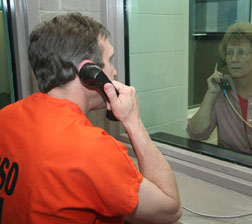
The First Call Is Free; the Rest Are a Fortune: Paying a $4.25 connection fee and then 75 cents per minute thereafter seems costly, unless, perhaps, we’re talking about a phone call from our future Mars colony back to Earth. It is, though, what an operator at the phone company Global Tel*Link says it costs for a call from Pennsylvania’s Carbon County Correctional Facility to anywhere beyond the local calling area. That’s in line with the rates other companies charge for prisoners around the country to make simple long-distance phone calls. To compare, prepaid cell phones on the outside top out at about 20 cents a minute, and a standard residential landline plan at just half that.

If you find it difficult to rally sympathy for prisoners’ hefty monthly phone bills, consider two things. First, we know that contact with the outside world while in prison is tied to better outcomes after prison. Second, those costs are generally borne by families and friends, either through collect charges or the refilling of debit accounts, what the Center for Constitutional Rights’ Annette Dickerson calls “a transfer of punishment.” Source

The price to call home: state-sanctioned monopolization in the prison phone industry: Exorbitant calling rates make the prison telephone industry one of the most lucrative businesses in the United States today. This industry is so profitable because prison phone companies have state-sanctioned monopolistic control over the state prison markets, and the government agency with authority to rein in these rates across the nation has been reluctant to offer meaningful relief.

Prison phone companies are awarded these monopolies through bidding processes in which they submit contract proposals to the state prison systems; in all but eight states, these contracts include promises to pay “commissions” — in effect, kickbacks — to states, in either the form of a percentage of revenue, a fixed up-front payment, or a combination of the two. Thus, state prison systems have no incentive to select the telephone company that offers the lowest rates; rather, correctional departments have an incentive to reap the most profit by selecting the telephone company that provides the highest commission. Source

Prison-Phone Rate Cuts Considered by U.S. Regulators:
U.S. regulators are considering rate caps and other steps to lower jailhouse telephone rates that enrich private equity firms as they cost U.S. prisoners and their families as much as $17 for a 15-minute call.

Federal Communications Commission Chairman Julius Genachowski yesterday proposed information-gathering that could lead to a vote to intervene in the $1.2 billion prison-phone market, FCC Commissioner Mignon Clyburn said at a rally today.

“For far too long, friends and family of the incarcerated have had no choice but to pay unconscionably high long-distance rates,” Clyburn told demonstrators seeking lower rates who gathered outside the agency’s headquarters in Washington.

Clyburn, like the chairman a Democrat, said the proceeding was started by Genachowski and could lead to lower rates “soon,” without specifying a timeline. Rate caps are among steps being considered, said two agency officials who spoke on condition of anonymity because the matter hasn’t been made public. Source

Human rights groups: Telecoms gouging prison callers: U.S. prisons, immigration detention centers and telecom carriers are charging “exorbitant” rates on collect calls made by inmates, and the U.S. Federal Communications Commission should step in to set rates, a coalition of 110 human rights groups, lawyers and professors said.

The expensive collect-call charges make it difficult for immigrants in detention to contact their families, legal counsel and human rights organizations, the groups said in a Thursday letter to the FCC.

Problems with prison phone rates are “well documented” by past media and government reports, said the letter, organized by Holly Cooper, associate director of the University of California Davis Immigration Law Clinic. A request for the FCC to address prison phone rates has been pending since 2003, Cooper noted. Source

Costly Phone Calls for Inmates: Members of Congress and civil rights groups are pushing the Federal Communications Commission to rein in telephone companies that, in many states, charge inmates spectacularly high rates that can force their families to choose between keeping in touch with a relative behind bars and, in some cases, putting food on the table.

The time is long past for the F.C.C. — which has been weighing this issue for nearly a decade — to break up what amount to monopolies and ensure that prisoners across the country have access to reasonably priced interstate telephone service.

The calls are expensive because they are placed through independent telephone companies that pay the state a “commission” — essentially a legalized kickback — that ranges from 15 percent to 60 percent either as a portion of revenue, a fixed upfront fee or a combination of both. According to a new report by the Prison Policy Initiative, a research group based in Massachusetts, depending on the size of the kickback, a 15-minute call can cost the family as little as $2.36 or as much as $17. Source


Recorded Jail Phone Calls Provide Valuable Evidence

A major concern in the use of contraband cell phones in prison is the fact that the call content, and associated call data, is not being captured. Now this data can be captured by replacing smuggled cell phones with a secure prison cell phone solution such as meshDETECT that records and stores this critical information for use by law enforcement. This article discusses the importance of these prison phone call recordings to prosecutors and law enforcement.

When Kiheem Taylor was charged with kidnapping two teenagers at a Timonium light-rail station and raping one of them, prosecutors struggled with an all-too common problem — they didn’t have enough solid evidence.

But Taylor gave prosecutors a break when he made phone calls from the Baltimore County Detention Center. Just months earlier, authorities had begun recording inmates’ phone calls, and Taylor implicated himself while talking to an ex-girlfriend. Judge Robert N. Dugan said at the time that the call was “overwhelming, damning evidence of [Taylor's] guilt.”

The 2008 case was the first time that Baltimore County prosecutors used a taped phone call from the detention center in a case, but the practice has been increasingly used across Maryland and the nation — including in the high-profile Trayvon Martin case. Though prosecutors say the evidence is crucial in otherwise difficult cases, defense attorneys complain that such monitoring is unfair to their clients.

William B. Buie III, who represented a teen in a recent murder case that relied on recorded prison calls, said he’s concerned such calls give government unrestricted power to monitor incarcerated individuals who have not yet been convicted. But such calls are “playing a major part of criminal cases,” he said.

Prosecutors have been monitoring calls for years, but improved — and increasingly affordable — technology has made it easier to record the calls, evaluate them and present them in court.

“It’s definitely a common practice,” said Steven Jansen, vice president of the National Association of Prosecuting Attorneys. “It can be great evidence.”

It’s no secret that the calls are monitored, he said, adding that some facilities even post signs next to phones. In Maryland, defendants are warned that their conversations are being recorded with a prompt each time they pick up receiver; officials can track them without seeking a judge’s approval.

But despite the warning at each call, defense attorney Jerry Tarud said, “The problem is, when these inmates are in jail, they tend to get isolated. Their anxiety sets in.”

For defense attorneys, the calls can be opportunities for their clients to unknowingly undermine their arguments, including in the Martin case in Florida. George Zimmerman, accused of killing the teen, had his original $150,000 bond revoked after authorities heard him discussing additional finances with his wife on a recorded line.

“The jail phone calls tend to be the nails going in the coffin,” Tarud said. It’s an increasing problem.”

In a city shooting trial last year, Tarud’s client, Donte Anderson, was convicted of first-degree assault after prosecutors pulled incriminating calls from jail.

In one call, prosecutors said, Anderson told an acquaintance about hiding the gun, in what they believe was coded language.

“Man … I can’t event tell you where’s it at right now cuz, he won’t be able to get to it,” Anderson said, according to court documents.

Dijon McClurkin, another defendant who was also convicted in the case, was allegedly also recorded telling an acquaintance to put pressure on the victim, who survived.

“You need to tell him that we ain’t do nothing, yeah man, those [expletive] ain’t do nothing, that’s what he needs to say, [expletive] ain’t do nothing, they are jammed up for no reason,” McClurkin said in a recorded call, according to court papers.

In addition to monitoring phone calls, law enforcement officials point out that detention facilities monitor mail and keep records of who visits. Inmates are also subjected to searches inside of their cells.

There, each inmate can choose up to 10 contacts; they can only call people on that list, according to the state Department of Public Safety And Correctional Services.

The Baltimore County Detention Center began recording all inmates’ calls in July 2008, one of the last jurisdictions in the state to adopt the technology. State’s Attorney Shellenberger had suggested the idea to the county police chief and the jail’s warden shortly after he took office in 2007.

The system was aimed at curbing contraband, gang violence and witness intimidation. Officials also hoped to prevent prisoners from ordering crime from behind bars.

Detention center staff, along with police and prosecutors, have access to phones in order to monitor for any potential problems within the facility. They also have the ability to block inmates from calling certain numbers if there are issues of witness intimidation or gangs.

“It’s to ferret out corruption we might have inside,” said James P. O’Neill, director of the detention center. But because the detention center on any given day ranges from 1,300 to 1,400 inmates, who have access to 80 phones from 8 a.m. to 10 p.m., not all calls are necessarily monitored.

Calls from attorneys are not recorded, either. O’Neil said all lawyers registered with the state bar association are omitted from recordings.

Last month, 19-year-old Sterlin Matthews was convicted of killing a 16-year-old on Halloween in 2008. It was the second time Baltimore County prosecutors tried the teen, after his first trial ended in a hung jury. Prosecutors were challenged by the lack of physical evidence linking Matthews to the shooting and uncooperative witnesses; the killer had been wearing a mask.

Buie, Matthews’ defense attorney, said after the trial that prosecutors “really did not know who committed the crime.” The jail calls, “sunk our ship,” he said.

County prosecutors William B. Bickel and Danielle Williams built a case around recordings of Matthews’ phone calls from the detention center, in which he is recorded telling friends about the witnesses to keep them from coming to court.

The jury took less than an hour to convict Matthews of second degree murder and related charges. His sentencing is scheduled for January.

“When you have a witness that says one thing to the police and then changes the story, if you can give an explanation, mainly a threat, then the jury will understand more,” Shellenberger said. “I think it was very helpful to give the jury context.”

When the trial was supposed to begin in mid-October, prosecutors said, the witness who identified Matthews in the shooting did not show up in court. She had previously identified Matthews to police as the masked teen who had been seen by the victim’s friends just before the shooting. Officials began to suspect witness intimidation.

Prosecutors said Matthews intentionally used another inmate’s ID number, which must be entered in order for inmates to make outgoing calls, to make it difficult for investigators to listen in on his conversations.

Homicide detective Alvin Barton also testified that he received a call from the witness saying she was too scared shortly before she was supposed to testify.

Matthews was also heard speaking to a friend through a wall, inside an interview room at police headquarters. All six of the interview rooms used by homicide detectives have surveillance cameras to record interviews with detectives.

When the detective left the room, Matthews is recorded speaking to one of his friends through the wall, saying his friend needed to “holler at them,” which prosecutors said was an attempt to deter the witness from testifying.

Source


BOP Inmate Crowding Study Shines Light On Need For New Approach To Telephone Access

The U.S. General Accountability Office (GAO) released a report last month on the Federal Bureau Of Prisons mounting overcrowding issues entitled, “Growing Inmate Crowding Negatively Affects Inmates, Staff, and Infrastructure.”

In this report, the GAO analyzed BOP’s inmate population data from fiscal years 2006 through 2011, BOP’s 2020 long-range capacity plan, and BOP policies and statutory authority. GAO visited five federal prisons chosen on the basis of geographic dispersion and varying security levels. The results are not generalizable, but provide information on the effects of a growing prison population.

While it is clear from the report that much needs to be done to address the root causes of the overcrowding, we believe that some of the current dangers and restrictions imposed by this situation can be mitigated through the deployment of the meshDETECT secure prison cell phone solution.

The GAO report excerpts below demonstrate how the introduction of our solution can increase telephone access, reduce prisoner movement while improving morale, and offset the loss or reduction of family visits:

Telephone Access

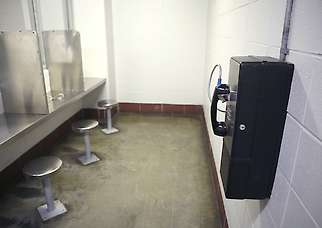
“The larger number of inmates also limits inmate access to the telephone to call home and computer to e-mail family members and other contacts. For example, at one facility we visited, each housing unit had three telephones for about 156 inmates.”

Clearly the deployment of secure prison cell phones would significantly improve the 1.2% telephone-to-prisoner ratio at this housing unit as well increase call access throughout the overcrowded BOP system.

Prisoner Movement

“BOP has implemented controlled movement for inmates, which is a practice that officials from one of the five states we reviewed also reported using, specifically to deal with crowded conditions. For example, because of crowded conditions, one way that BOP restricts inmates’ movement in high and medium security facilities is by instituting earlier in-cell hours at night for inmates.”

In many cases, prisoner movement is required to allow the detainee access to the wall phones. With a secure prison cell phone, no movement is needed and those detainees who are restricted to their cells for longer hours can now use that time communicating with family and loved ones. This will help reduce frustration with the longer in-cell time.

Visitation

“Crowded visiting rooms make it more difficult for inmates to visit with their families. BOP headquarters officials said the quality of the interaction between an inmate and family can positively affect an inmate’s behavior in prison and aids an inmate’s success when returning to the community. Each BOP facility has visiting space to accommodate the number of inmates that the facility was designed to house and a visitor capacity to enable staff to manage the visitation process. The infrastructure of the facility may not support the increase in visitors as a result of the growth in the prison population. Further, with more inmates, the visitation process requires more staff resources…Limited visiting capacity and the larger numbers of inmates can lead to frustrations for inmates and visitors, such as when visits are shorter or visitors are turned away because there are too many visitors on a particular day.”

Reduced visitation time can be offset with expanded telephone time via a secure prison cell phone. These phones are essentially “wireless prison payphones™”, with all the monitoring, recording an forensic capabilities of the wall phones.


MP3s, Video Visitation And Voice Mail in Prisons

There are a number of interesting aspects to this deployment of new communications technologies in the Oregon state prison system. First, MP3 players will be able to receive text messages and photos. Also, for the first time, inmates can be contacted from the outside by phone. Family and others can leave a voice mail of up to three minutes on the prison payphone system. Wouldn’t a secure prison cell phone solution that uses a single device for music, photos, text messages, outbound and inbound calls (with no maximum time limit), voice mail and even video visitation be more efficient than multiple devices, platforms, and kiosks?

Most Oregon inmates are finding it cheaper to phone home, and state officials hope they burn up the lines.

Flat-rate calls are part of a wave of new technology rolling out in the state’s 14 prisons. Starting this week, the state’s 14,200 inmates can buy MP3 players to receive text messages and photos, and to buy and store music. Another system will enable them to “video visit” families who are often hundreds of miles away.

State Corrections Department officials expect the technology to drive down recidivism and cut prison costs that now consume nearly a dime of every dollar in the state’s general fund budget. Studies show inmates who have outside contact are less likely to commit new crimes once they are freed.

“We know scientifically that visiting is good not just in order to create safe prisons,” said Colette Peters, director of the Oregon Department of Corrections. “It actually improves public safety and prevents future victimization.”

The system won’t cost taxpayers. The contractor, Telmate of Ontario, will cover equipment costs. Inmates and their contacts will split service costs. The Corrections Department will continue to collect commissions on the phone system totaling $3 million a year, which it spends on inmate programs.

Prison workers, able to contact inmates directly through voice or text messages, expect to save time.

“This enhances our productivity tremendously in ways we couldn’t ever use tax money to fund. The cost would be prohibitive,” said Kelley Morton, a Corrections Department policy manager. “This is very good for the taxpayers and DOC.”

Under the new phone system, launched July 1, inmates in Oregon prisons pay a flat rate for domestic calls. That raised the cost for local calls. But now a call from the big prison in Ontario to Portland or Eugene costs $4.80 for a 30-minute chat, down from $15.85. Inmates and their families deposit money to cover the calls and can pay online through Telmate in addition to paying by mail or in person.

For the first time, inmates can be contacted from the outside by phone. Family and others can leave a voice mail of up to three minutes. Experience elsewhere shows messages don’t sit for long.

“The average length of time for a voice mail to be picked up is a couple of hours. And no one is telling them they have a message,” said Christopher Ditto, Telmate marketing director.

Video visits are expected to be another popular feature with inmates. The online chats are scheduled, and the outside contact pays the fee. The service starts next month in the two most remote prisons — Snake River Correctional Institution in Ontario and Warner Creek Correctional Facility in Lakeview.

Prison officials are most eager to get Snake River online. It’s the state’s largest prison with nearly 3,000 inmates — most from the west side of Oregon. To visit in person, many families have to drive six or more hours.

Inmate Brian K. Yancy, 35, convicted in 2005 in Jackson County of robbery and assault, served five years at Snake River. He saw his wife and three children three to four times a year because they faced a 10-hour drive from their home in northern Nevada. Two years ago, he was transferred to the Lakeview prison, still a three-hour drive one way.

The new video visiting “is going to benefit us a lot,” Yancy said. “When the weather’s bad, you worry about your family traveling through the mountains. And the economy isn’t too good.”

Yancy said he’s especially eager to see his children, even online, on a monthly basis. “The kids can see me more often, and it will be like having both their parents around.”

He said he expects the video visits to improve connections with his wife. “You can talk on the phone, but it’s hard to have a relationship when you can’t see that person,” Yancy said.

The Oregon Corrections Department transformation is Telmate’s largest. The company has converted county jails across the country, and two years ago rewired the state prisons in Montana.

Dale Tunnell, investigations chief at the Montana Corrections Department, said inmates made dramatically more calls. “They think it’s great,” he said.

The system also gives prison officials a new investigative tool. All calls, chats and messages are recorded, and state investigators can analyze patterns. “We’ve made some really good cases involving contraband,” Tunnell said.

Oregon officials expect the same bonus. Call information “is very valuable for looking for patterns of extortion, theft, that kind of thing,” Morton said. Inmates also will be limited to “corrections-friendly” music downloads.

Peters, the Corrections Department director, said the new technology should especially help the 59 percent of Oregon inmates who get no visitors. Inmates with outside contact behave better in prison and perform better when released, she said.

A landmark study of Minnesota inmates found that “any visit reduced the risk of recidivism by 13 percent for felony reconvictions and 25 percent for technical violation revocations.”

Prisoners also will have better social media skills when they leave, Morton said. “When inmates get out, they often face a radically different world,” Morton said. “If we can give them an opportunity to practice, this might help them be better prepared for doing online banking, and that that’s how people communicate now — little bits of information.”

How much to stay in touch?

Inmate costs*

MP3 player: 4G, $120; 8G, $140. Inmates can get a $25 rebate if they turn in a CD player, which can be converted into an illicit tattoo gun.
Domestic calls: 16 cents a minute, with 30-minute maximum ($4.80)
International calls: 50 cents a minute, with 30-minute maximum ($15)
Music download: $1.75 a song

Cost to others
Video visit: 66 cents a minute, with 30-minute maximum ($19.80)
Text message to inmate MP3: 44 cents; discounts for multiple messages
Photo to inmate MP3: 60 cents
Details: telmate.com
* Others can deposit money to cover these.

Source


Working The Jailhouse Black Market

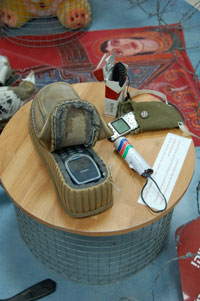
A fascinating article about how contraband cell phones facilitate the prison black market economy. An economy in which even some of the guards are participants. As the article states, “a $20 basic phone earns the guards that sell it an easy $400 to $500…But if you use the phone and sell time off of it to the other inmates, you’ll make your money back in one month.” As we have written before, wireless airtime is the new prison currency.

There is a long and sordid tradition of business going on in American prisons.

The isolated consumer base, the high demand for goods, the excruciatingly limited supply — it’s a hothouse of entrepreneurial finesse, extreme risk — and obscene returns.

The biggest selling items behind bars have always offered a slice of escape. Not a file, or a schematic of the pipes leading outside the gates, but an instant of abandon allowing an inmate to forget about his life and to live outside the walls, if only in his mind.

Until recently that meant drugs, and the slippery trick of allowing the mind to believe it was someplace else, but that has changed.

There are still drugs in prison, but now there’s a better escape that for the enterprising and charming convict may even generate a source of monetary return: smart phones. It’s no secret, prison cell phones are in the news and we wanted to see what we could find out.

To learn more about the “hustle,” what inmates call any moneymaking scheme in prison, we rented a P.O. Box and sent off letters to a handful of American prisoners. Among others we heard from Leon Kingsley (not his real name) who eventually talked to us on a smart phone away from the prying eyes and ears of penal officers. Kingsley says that a $20 basic phone earns the guards that sell it an easy $400 to $500. Kingsley sent us the pictures here to prove what he says is the truth.

“And the police will do it, too, because they get paid very little,” Kingsley, who’s serving a 10-year state sentence and 110-month federal sentence, says “But if you use the phone and sell time off of it to the other inmates, you’ll make your money back in one month.”

“There’s a lot of money in here…a lot of money you can make. If you have a good officer, you can make $4,000 or $5,000 a week.”

If the phone has wireless capabilities, it can cost the prisoner — or their people on the outside — as much as $1,000. With high-speed internet access, Kingsley says the inmates will make Facebook accounts, “meet girls and get them to send money.”

For $50, the inmates can purchase 15 hours of phone time, typically broken up to an hour a day, 30 minutes at a time. Although most inmates use these precious moments to call friends and family, there’s also the opportunity for convicts to contact co-defendants and witnesses — such as the alarm caused when authorities found unauthorized cell phones in convicted serial killer Charles Manson’s property.

Through what Kingsley calls “word on the street,” prisoners usually know which guards will help them bring in contraband, the same way that civilians who want illegal goods know where to go and who to ask.

“You just try them up, you have to get talking to them,” he says.

If the officers agree to deal, the inmates have cash sent in.

Aside from cell phones, anything that you can’t buy at the prison store (commissary) has value on the inside.

Kingsley says a can of Bugler tobacco — which goes for around thirty bucks — can be broken down and sold for $1,200. An ounce of pot that costs $100 “on the streets” will go for $600 or $700 behind bars.

“There’s the weed man, the meth man, whatever you want. And your friends will tell you these things.”

In order to conduct business with one another, the prisoners have credit cards — most of them use Green Dot Reloadable prepaid cards, which their loved ones can purchase at drugstores.

Once the people “on the outside” purchase money packs to put on the prepaid cards, they’ll receive a security code, and the people “on the inside” can use these codes to purchase whatever they want. Their sellers will then call a 1800-number, “give them the code” and have the money downloaded onto their own credit cards.

“A lot of stuff in here is run by the gangs…there’s the Mexican gangs, the Bloods, the Crips. They all run their own shit. They keep their business pretty good and they don’t F*** each other over.”

“They always say that they were already in gangs before coming into prison, but a lot of them are weak people forming up with others so no one runs them over.”

“I mean, I’m not in a gang and I do fine,” he says.

When you’re involved with anything illegal — even if you’re already in jail — you run the risk of “catching” new charges, but Kingsley says he “hasn’t seen it getting done.”

When he was caught with a phone, Kingsley tells us he received a written a disciplinary report (DR), which required him to go to the prison court.

With a D.R. citation, Kingsley says the officers might restrict your commissary privileges, deny you from making legitimate phone calls or receiving mail for 90-days, but most likely, the offender won’t catch new charges because the officers try to “sweep it under the rug.”

“They know the cops are bringing it in, not the prisoners. And they don’t want news of that getting out.”

Kingsley says the officers will do a “clean up,” where they check the cells, twice annually, and confiscate anything unauthorized. This gets expensive for inmates so they hide their contraband, like phones, in food and in “places where [they've] cut into the walls,” under boxes and inside furniture if they can manage to take it apart.

“It’s a constant racket for officers to make more money really, because they’ll take our stuff so we can sneak in more stuff and pay them all over again.”

Kinsley shares an open cell with 40 other people. He has about five years left to serve on his sentence.

Source


Prisoner RFID Tagging System Dropped

This is an interesting article about the failure of a prisoner RFID tracking system trial conducted in an Australian jail. It is unclear from the article what caused the signal interference issues between the prisoner bracelets and the guards’ duress alarm bracelets that led to the decision to drop the trial. However it seems the program had problems from the beginning, so perhaps the main issue was vendor program and technology management related rather than a problem with the RFID technology itself.

The multi-million dollar electronic tagging system for prisoners at the territory’s jail has been quietly dropped.

The high tech system, that electronically monitored the whereabouts of all the prison’s detainees, has been plagued with technical problems throughout the early years of the jail.

The ACT government initially hired contractor NEC in 2008 on a $3.9 million, five-year deal for the ”RFID project”, with the technology company to install and monitor a system for detainees that included a duress alarm system for staff and visitors.

The system installed at the AMC included 540 bracelets, 260 for inmates, 160 for custodial staff and 120 for visitors and other staff, with the system intended as an optional ”secondary security measure” at the centre, one that provided additional tracking capabilities and data collection when criminal activity was taking place in the jail.

But the project was dogged by glitches and security surrounding the program had to be boosted in early 2010 when three of the bracelets went missing.

They were disabled en mass early last year when it was discovered they could interfere with the duress alarms worn by guards, placing the prison staff in danger.

Now Corrections Minister Chris Bourke says the prisoner bracelet component of the project had been abandoned.

”In October 2011, all detainee RFID devices were removed,” Dr Bourke said. ”Staff duress alarm devices remain in place.

”The decision to remove the detainee devices was made due to ongoing problems with the operation of the RFID system, including problems with battery life, which the private contractor has been unable to resolve to ACT Corrective Services’ satisfaction since detainees were first received into the AMC in 2009.”

”The Territory is now in discussion with the provider to finalise the contract whilst ensuring that a staff duress system remains operational. ”Those discussions are at a mature stage.” Dr Bourke said the abandonment of the RFID project meant that security continued to be managed by conventional methods.

”Security of the AMC and detainee management has not been compromised,” the minister said. ”The RFID system has the capacity to enhance prisoner management, but is not the primary mechanism for this function.

”Normal prison operations, as occur in prisons throughout Australia, have been maintaining appropriate custodial standards to date and will continue to do so.”

A Corrective Services spokeswoman said in a statement that NEC were still maintaining the staff duress alarms at the AMC.

”As NEC were unable to commission a system that complied with the contract requirements to the satisfaction of ACT Corrective Services, the contract has now been varied so that the duress alarm system is maintained until a new duress alarm system is procured,” she said.

Source


Predatory Prison Phone Rates

A bipartisan group of prison reformers is calling on the Federal Communications Commission to stop phone companies from charging inmates what they call unreasonable and predatory rates to make phone calls.

The letter is signed by conservative leaders such as Gary Bauer and David Keene, as well as civil rights groups such as The Leadership Conference on Civil and Human Rights, the NAACP, the National Council of La Raza, and the National Organization for Women.

As the letter states, “Healthy relationships with their families and other members of the community are the most important factor in prisoners’ successful return to their neighborhood. Maintaining the bonds of a family and support network is a very effective way to reduce recidivism among inmates, which is an important national goal…Yet, predatory phone rates discourage regular telephone contact with stable family members and others in the community.

Prisoners’ friends and families often provide the only opportunity incarcerated individuals will have to re-connect with a job and a support network that can prevent them from returning to prison. We need more people connecting to those in prison, not fewer. Sound public policy dictates that we should not disincentivize the very behavior that will help us keep families together and in turn reduce future crime.”

Why such astronomical fees? Phone companies often pay commissions to the state after they’ve won an exclusive contract to provide phone service at a state’s prisons. (All but eight states allow these exclusive contracts.) The phone companies then pass on the cost of paying the state to inmates and their families, who have to shell out as much as $17 for a 15-minute call, the group says. That can add up to $250 a month to call home for an hour each week—a cost that the often-poor families of inmates can hardly afford.

But the money also drives revenue to the country’s cash-strapped, crowded prison systems. In 2011, these phone company commissions generated $152 million in revenue for state prisons alone. In the federal system, which charges lower rates, the millions raised from commissions helps fund recreational and job-related activities for inmates, according to a Government Accountability Office report. (Source)

One strategy is to reduce the commissions, and therefore the cost of the telephone service, and offset this lost revenue by offering the new meshDETECT secure prison cell phone service. Many prisoners and their families would be willing to pay a premium to have the convenience and privacy a cell phone would provide their conversations. This will increase total revenues, reduce the contraband value of smuggled cell phones and offer more opportunities for prisoners to stay in touch with family and friends.

Here is the full text of the letter:

May 18, 2012

CAP INTERSTATE PRISON PHONE RATES

Chairman Julius Genachowski

Federal Communications Commission

445 12th Street, SW

Washington, DC 20554

RE: Docket No. 96-128, Petitioner Martha Wright et al., Alternative Rulemaking Proposal

Dear Chairman Genachowski:

We write to you as organizations and individuals that represent a wide variety of views on many issues, but that stand united on the need to reduce the exorbitant rates for telephone calls from prisons. Unreasonably high prison phone rates unjustly punish the families of people who are incarcerated, and contribute to rising recidivism rates by deterring regular telephone contact with family members and loved ones. Our diverse groups strongly believe that action on a petition that has been pending before the Federal Communications Commission since 2003 represents a critical opportunity for the Commission to exert its leadership in this area. Accordingly, we urge you to act quickly to address this problem by capping the charges that can be imposed for interstate prison phone calls.

As you are aware from the record that has been compiled at the FCC, the costs of telephone calls from incarcerated people are often extraordinarily high—well beyond what most people in our country pay for telephone service. It is cheaper to call Singapore at 12 cents a minute from a cell phone than it would be to speak to someone in prison in this country. A typical interstate collect call from a prison has a $3.95 connection fee (regardless of the length of the call), while rates per minute can be as high as almost 90 cents per minute. This can result in charges of $10-17 for a 15-minute collect call or $250 per month for a weekly one-hour call. Prisoners do not bear these costs; rather it is the family members and loved ones outside of prison who pay these extremely high rates.

The high rates are caused by the system used to procure telephone service at correctional institutions. Prisons request bids from competing telephone companies, requiring each bid to include the payment of a fee or commission to the prison in addition to the provision of telephone service. The costs of the calls are passed on to prisoners’ families in the form of higher telephone rates, while the prison reaps the benefit of the extra fees and commissions. Thus, prisons have every incentive to choose bids that maximize fees and maximize telephone rates—a clear “moral hazard.” While competition would be everyone’s first choice for constraining telephone prices, in this case consumers—prisoners and their families—have no voice in the selection of the carrier. The prison system that does select the carrier actually benefits from the higher rates, leaving the actual consumers as a literally captive market, unable to shop around for lower prices.

Healthy relationships with their families and other members of the community are the most important factor in prisoners’ successful return to their neighborhood. Maintaining the bonds of a family and support network is a very effective way to reduce recidivism among inmates, which is an important national goal. The rate of recidivism is at crisis levels in the U.S.; within three years of being released, 67 percent of ex-prisoners re-offend and 52 percent are re-incarcerated. Americans are paying dearly for this trend. According to the Pew Center on the States, state and federal spending on corrections has grown 400 percent over the past 20 years, from about $12 billion to about $60 billion. Yet, predatory phone rates discourage regular telephone contact with stable family members and others in the community.

Prisoners’ friends and families often provide the only opportunity incarcerated individuals will have to re-connect with a job and a support network that can prevent them from returning to prison. We need more people connecting to those in prison, not fewer. Sound public policy dictates that we should not disincentivize the very behavior that will help us keep families together and in turn reduce future crime.

It does not have to be this way. The U.S. Bureau of Prisons and several states that have rejected these commission payments charge reasonable rates and maintain superior levels of security. A recent study by the Government Accountability Office found that the Bureau of Prisons typically charged less than most state prison systems, yet continued to produce some profit for use by the prison, and also met its security objectives. To illustrate, the Bureau of Prisons charged 6 cents per minute for local calls and 23 cents per minute for long-distance calls, and generated $34 million in profits in 2010.[1]

In sum, the exorbitant rates paid by prisoners’ families increase recidivism, and place an undue and unfair burden upon the innocent. These spiraling costs are not attributable to security needs and cannot be corrected by a marketplace solution. As the only agency with jurisdiction over long distance rates, the Federal Communications Commission is the correct venue to resolve this problem. A firm stance by the Commission, along with recommendations that will help guide the state regulatory bodies with authority over local telephone rates, will provide a strong impetus to improve the situation at every level. Prisoners will be able to be in more frequent contact with their loved ones, and the public will be safer as a result.

For all the above reasons, we urge you to cap interstate prison phone call rates and take up the long-overdue task of protecting a vulnerable population from abusive practices. Thank you for your consideration.

Sincerely,

The Leadership Conference on Civil and Human Rights

ACLU

Rabbi Menachem Katz, The Aleph Institute*

David Keene, American Conservative Union*

Gary Bauer, American Values*

Asian American Justice Center

Chris Cannon, Cannon Industries, Inc.*

Center for Constitutional Rights

Center for Media Justice

Charles Hamilton Houston Institute for Race and Justice

The Constitution Project

Consumers Union

Tom McClusky, FRC Action*

Free Press

Human Rights Defense Center

International CURE

NAACP

Galen Carey, National Association of Evangelicals*

National Council of La Raza

National Hispanic Media Coalition

National Urban League

New America Foundation, Open Technology Initiative

NOW

PolicyLink

Prison Fellowship

Public Knowledge

Rev. Lou Sheldon and Andrea Lafferty, Traditional Values Coalition*

United Church of Christ, OC, Inc.

United Methodist Church, General Board of Church and Society

Washington Lawyers’ Committee for Civil Rights & Urban Affairs

*Institutional affiliation listed for identification purposes only.


Reduced Prison Phone Rates Pave the Road to Rehabilitation

This is a great article discussing the value and need for more communication between prison detainees in order to reduce recidivism. As the article states, “Phone calls can mean the difference between maintaining relationships that make leading a healthy life outside of prison or falling into a cycle of moving in and out of prison.” High cost is part of the reason for the epidemic of contraband cell phones being smuggled into prisons everywhere.

There are multiple reasons why families and prisoners are unable to stay connected, including the reason discussed in this article – the high cost of phone calls from prisons and jails. However, there are other reasons that we feel can be addressed by the unique meshDETECT secure cell phone solution.

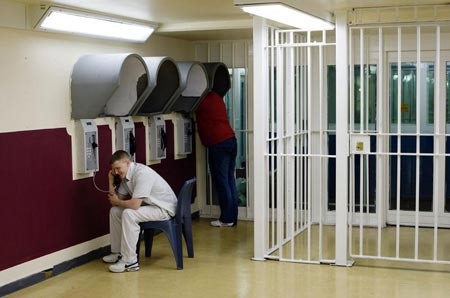
For instance, there are a limited number of payphones in each prison facility. As one wife of a prisoner in a federal prison told us, “The lines that an inmate has to wait in to make a call are at least an hour long (during prime phone time). Often, this breeds heightened emotions and “combative” type situations for inmates. For example: if one guy is taking too long on his call and someone makes a rude comment/remark it can easily start a fight. I hear about it often. My husband and I will usually cut our conversations short out of respect for other inmates behind him in line.” Not only does this limit the amount of time on the phone, and risk prisoner and correctional officer safety, the quality of the calls is impacted. Prisoners and their loved ones would like the privacy (not secrecy) to allow them to speak of health, personal and private matters when communicating.

Especially for those families that are unable to visit their incarcerated loved one due to distance or other circumstances, the prison payphone system is a lifeline for all involved. Our goal is to strengthen and enhance that lifeline while providing the prisons the security and control necessary to prevent improper use of the cell phone. In this way, we are reducing the demand for contraband cell phones and aiding prisoner rehabilitation.

Chris Duran understands the value of a phone call. Duran pays roughly $2.80 for a 15-minute phone call to talk with her partner who is incarcerated at a detention center in Albuquerque, New Mexico. That same call in Colorado would be $5.00, the difference is attributed to the unregulated prison phone rate system. Phone companies will often include high commissions to state prisons within contracts in exchange for being the exclusive service provider. The rate of these commissions inflates the cost of phone calls for families in states that have failed to regulate this practice.

Many times expensive phone calls create a barrier between a prisoner and their family’s ability to stay connected and provide crucial support for loved ones. Luckily for Duran, she and her partner live in one of the eight reformed states that have ended the practice of commissions. New Mexico’s rates are relatively low; prisoners are charged roughly$.20 a minute to talk with loved ones. “The only way that our family stays together and stands out is that she has someone to call on the outs who loves her,” said Duran in a video recorded last year by the Media Literacy Project in Albuquerque, New Mexico. “Really that’s the only way we have to stay in contact, through the PCS phone system.” For Duran’s partner and others behind bars, phone calls can mean the difference between maintaining relationships that make leading a healthy life outside of prison or falling into a cycle of moving in and out of prison.

Research suggests that prisoners who maintain contact with family or friends fare better upon release than those who do not maintain contact. A 2005 report by the Anne E. Casey Foundation found that families are a person’s first and last resort for housing and support when released from prison. The prison system considers a prisoner’s return home to their parents, children, partner or other family members to be the primary reentry plan upon release. It’s crucial that prisoners maintain connections with loved ones for support and to adequately prepare for reentry into their communities upon release. Whether or not a system ensures that prisoners are adequately prepared for reentry has an impact on whether or not they will return to the system.

The average U.S. recidivism rate lingers around 40 percent. According to a survey conducted by Pew and the Associate of State Correctional Administrators, 43 percent of released prisoners in 2004 were re-incarcerated within 3 years for new offenses or parole violations. Between 1973 and 2009, the nation’s prison population grew by 705 percent, resulting in more than 10 percent of adults behind bars.

Not only do high incarceration and recidivism rates affect families, they also affect taxpayers whose taxes fund a portion of state prison budgets, according to the Vera Institute of Justice. Annual state and federal spending on corrections exploded by 305 percent, or 52 billion people, during the past two decades. During that same period, corrections spending doubled as a share of state funding and accounts for 1 in 14 general state fund dollars, according to the Pew Center on the States.

These astonishing trends incited various prison justice advocacy efforts and drew the attention of conservative lawmakers whose shrinking budgets have caused them to re-evaluate how correction dollars are spent. For example, South Carolina’s prison population tripled over 25 years and was projected to grow by more than 3,200 inmates by 2014. Conservative groups like Right on Crime, a partnership between the Texas Public Policy Foundation and Pat Nolan Prison Fellowship,worked on passing a prison reform package along with former Speaker of the House Newt Gingrich. The initiative ultimately gained the support of justice advocacy groups like the ACLU.

Prison reform advocates recognized that over half of the state’s population was incarcerated for nonviolent crimes. They found that the state could save $350 million by adjusting sentences for nonviolent offenses and targeting barriers prisoners face upon release. Within the past years, all 19 states that cut their imprisonment rates also experienced a decline in their crime rates, according to the Pew Center. It’s clear that a dollar invested in rehabilitation yields a greater return by keeping released prisoners out of the system and reducing the correction costs for states over time.

Congress also targeted this country’s high recidivism rate by passing the Second Chance Act in 2008. This piece of legislation authorizes government funds for nonprofits and agencies that would improve the conditions facing prisoners upon their release. These programs use resources for housing, employment, substance abuse treatment, continuing education and family programming. Reducing recidivism saves taxpayer dollars in the long run and reduces prison populations which would alleviate a prison system’s dependence on funds collected from commissions.

A policy reform that should be addressed by both states and the FCC is ensuring that prisoners can stay connected with the loved ones by keeping phone costs low. Other states can follow the lead of the eight reformed states and outlaw the practice of commissions. The FCC can also regulate interstate phone rates which would lower the costs for families, enabling them to stay better connected. “Throughout the time I was in the system I had a really strong support system with my family,” said Duran. “The only way I could stay in contact with my family was through the phone.” She was released in 2002 and has been able to stay out of the detention system.

Author: Leticia Miranda, Clarissa Ramon
Source


Ohio Ends Video Visitation Program At 3 Prisons

Another article that reinforces the value, to both detainees and their families, of frequent contact and interaction.

As the article states, “For children, those meetings were important, she said, because children who have incarcerated parents have a higher risk of becoming teenage parents, dropping out of school, abusing drugs and committing a felony.”

meshDETECT enables more frequent and higher quality conversations between prisoners and their loved ones through the deployment of its secure prison cell phone solution.

Marshae Hunter remembers the close bond she had with her mother when she was a child. But that relationship changed drastically when her mom went to prison.

The times when they baked cookies together, did homework or played with dolls abruptly came to an end. Hunter, who was just 13, was cared for by her grandmother.

But a video visitation program through the Cleveland Eastside Ex-Offender Coalition allowed the family to reopen lines of communication. The program allowed for face-to-face meetings, via video conferencing.

That video program, which helped nearly 200 Northeast Ohio families keep in touch with incarcerated relatives, is gone now.

It ended last fall because of financial troubles.

Experts say its loss created a void that remains unfilled. Children who have a parent or parents behind bars are at greater risk of trouble themselves. Visitation can ease that. And, they say, social visits for inmates while they’re in prison can help lower recidivism rates once they get out.

A state grant that largely funded the coalition’s program, Project IMPACT (Incarcerated Mothers, Parents And Children’s Televisitation) ended last year. The grant was no longer available. The coalition tried to keep the program going, but it accrued a $12,000 deficit, said Caroljean Gates, the coalition’s executive director.

The program, which began in 2004, allowed kids and their relatives to visit through video conferencing with their incarcerated relatives for one hour a week at three Ohio prisons: the Ohio Reformatory for Women in Marysville, Trumbull Correctional Facility in Leavittsburg and the Allen Correctional Facility in Lima. The visits were free to participants.

All the electronic equipment for the prisons and the office was paid for by the coalition.

Gates said she kept the program going as her staff looked for additional funding, but the $1,800 a month it took to pay for a high-speed Internet connection became too expensive. Now the agency is paying back its debt and is at work developing a strategy to restart the program and sustain it.

“We still kept the program going for our clients as we looked for other sources of revenue, but we became overwhelmed,” Gates said. “Our phones have constantly been ringing every week because people want to talk with their loved ones.”

Gates said most of the families who used the video program didn’t have the means to travel long distances to see incarcerated relatives. They also found videoconferencing more convenient than waiting to get on a visitor list at a state prison.

For children, those meetings were important, she said, because children who have incarcerated parents have a higher risk of becoming teenage parents, dropping out of school, abusing drugs and committing a felony.

Not much information exists that shows the number of offenders in state prisons who are parents. A 2010 report by the Ohio Department of Rehabilitation and Correction showed that in a sample of 3,396 people, 38 percent of female inmates and 21 percent of males had dependent children living with them at their time of arrest. In a 2004 study about incarcerated fathers, 52 percent of 965 men sampled said they had a minor child.

For Marshae Hunter, now 20, the visits helped her re-establish a connection with her mother, Thomia Hunter, and helped her avoid the same path. When her mother was sentenced to prison in 2006 for murder, Marshae didn’t understand how to process her pain and began to rebel, relatives said. She got into fights at school and struggled academically.

Her grandmother, Vanessa Hunter, said she feared Marshae could someday end up in prison, just like her mother.

“They were very, very close when Thomia went away,” Hunter said. “She was hurt and too young to understand.”

But the ability to talk to her mother made a big difference.

“Being able to see her mom and talk to her eased some of her strain,” Vanessa Hunter said. “We would sit in that room and her mother would tell her the same things I did. We tag- teamed her.”

Marshae Hunter graduated from Shaw High School and now attends Lakeland Community College. She studies early childhood education and works part time for the Downtown Cleveland Alliance as a safety officer.

Since the visitation program was suspended, Hunter still tries to talk with her mother by phone once a week and writes her letters. She said her mother has always encouraged her to follow a positive path.

“I felt like I needed to finish school because if I did well, then she wouldn’t be in there getting down on herself for how I turned out.”

Other participants in the Eastside Ex-Offender Coalition program said it is sorely missed.

Andrea Mudd, 41, of Cleveland, has a 12-year-old daughter with Charles Bibb, who is serving a 15-year sentence at the Allen Correctional Facility in Lima for drug possession and involuntary manslaughter.

Her daughter, Kaylin, an honor-roll student, began to ask about who her father was a few years ago, Mudd said. She last saw him in person when she was 3 years old. Through the video program, she was able to visit a few times a month.

During their visits, Kaylin and her father would play educational games that Kaylin had learned at school, Mudd said. Bibb also talked to Kaylin about his mistakes, and encouraged her to do well in her studies.

“I think the visits were very helpful because now she knows where she came from,” said Mudd, who added that her daughter and the child’s father now write each other.

The visits also help inmates, and Ohio Department of Rehabilitation and Correction officials said they are looking to expand video visitation services at state facilities.

Research shows that offenders who get the social interaction from visits while incarcerated have a lower recidivism rate once they are released from prison, said JoEllen Smith, a spokeswoman for the corrections department.

Smith said the video visitation cuts down on costs for visitors to travel to facilities and for prisons. She said the department would welcome back the Cleveland groups’ program and said the department is looking at how to expand video visitation options at its prisons. Already, the corrections department offers a pay remote visitation service at four prisons.

Gates, a former probation officer, said she believes criminals have to pay their debts to society, but that, for children, the former program helped to establish a much-needed connection with parents. She said she wants to get it back in operation soon.

“When a parent goes to prison it is the child who suffers the most,” Gates said. “No matter who you are or where you come from, as long as a child wasn’t abused, all children deserve to have a relationship with their parents.”

Source