Tag Archives: contraband cell phone

FCC Takes Up Technology Solutions To Contraband Cell Phones

FCC-contraband-cell-phonesThe FCC today issued FCC 13-58, Contraband Wireless Device Notice of Proposed Rulemaking (NPRM), to “remove barriers to the deployment and viability of existing and future technologies used to combat contraband wireless devices.” The NPRM discusses current technologies such as managed access, detection, jamming and wireless carrier service termination of identified contraband cell phones.

Below are excerpts from the rulemaking document:

Inmate use of contraband wireless devices has grown within the federal and state prison systems parallel to the growth of wireless device use by the general public. In federal institutions and prison camps, GAO reports that the number of cell phones confiscated by the Federal Bureau of Prisons (BOP) grew from 1,774 in 2008 to 3,684 in 2010. While not all states track or report data on the use of contraband wireless devices, the data that has been reported demonstrates significant growth. For example, California correctional officers seized approximately 261 cell phones in 2006; by 2011, correctional officers discovered more than 15,000 contraband wireless devices. Further, a test of an interdiction technology in two California State prisons detected more than 25,000 unauthorized communication attempts over an 11 day period in 2011. A similar interdiction system permanently installed in a Mississippi correctional facility reportedly blocked 325,000 communications attempts in the first month of operation, and as of February 2012, had blocked more than 2 million communications attempts.

In this Notice of Proposed Rulemaking (Notice), we take steps to facilitate the development of multiple technological solutions to combat the use of contraband wireless devices in correctional facilities nationwide. Prisoners’ use of contraband wireless devices to engage in criminal activity is a serious threat to the safety of prison employees, other prisoners, and the general public. Through this Notice, we seek to remove barriers to the deployment and viability of existing and future technologies used to combat contraband wireless devices. In this Notice, “contraband wireless device” refers to any wireless device, including the physical hardware or part of a device – such as a subscriber identification module (SIM) – that is used within a correctional facility without authorization by the correctional authority. We use the phrase “correctional facility” to refer to any facility operated or overseen by federal, state, or local authorities that houses or holds prisoners for any period of time.

We propose a series of modifications to the Commission’s rules to facilitate spectrum lease agreements between wireless providers and providers or operators of managed access systems used to combat contraband wireless devices. Those proposed modifications are:

  • Revising the Commission’s rules to immediately process de facto lease agreements or spectrum manager lease agreements for spectrum used exclusively in managed access systems in correctional facilities, and streamlining other aspects of the lease application or notification review process for those managed access systems in correctional facilities.
  • Forbearing, to the extent necessary, from the individualized application review and public notice requirements of Sections 308, 309, and 310(d) of the Communications Act of 1934, as amended (the Act), for qualifying managed access leases.
  • Establishing a presumption that managed access operators provide a private mobile radio service (PMRS), streamlining the process for seeking Special Temporary Authority (STA) to operate a managed access system, and seeking comment on whether to establish a requirement that managed access providers provide notice to nearby households and businesses prior to activation of a managed access system.

We also propose to require wireless providers to terminate service, if technically feasible, to a contraband wireless device if an authorized correctional facility official notifies the wireless provider of the presence of the contraband wireless device within the correctional facility. We seek comment on the elements of the proposed notification and termination process, including who should be authorized to transmit a termination notification to the wireless provider, the form of such termination notice, and any safeguards necessary to ensure that service to legitimate wireless devices is not inadvertently terminated. We seek comment on the implication of our proposals on detection and managed access system operators’ compliance with or liability under Section 705 of the Act and federal law governing the use of pen registers or trap and trace devices. Finally, while we are limiting our proposals to managed access and detection solutions, we nevertheless invite comment on other technological approaches for addressing the problem of contraband wireless device usage in correctional facilities.

Further on in the document, it discusses managed access systems and some of the current deployments in state prison systems:

Managed access systems are micro-cellular, private networks that analyze transmissions to and from wireless devices to determine whether the device is authorized or unauthorized for purposes of accessing public carrier networks. Managed access systems utilize base stations that are optimized to capture all voice, text, and data communications within the system coverage area, which would be a correctional facility in the instant case. When a wireless device attempts to connect to the network from within the coverage area of the managed access system, the system cross-checks the identifying information of the device against a database that lists wireless devices authorized to operate in the coverage area. Authorized devices are allowed to communicate normally (i.e., transmit and receive voice, text, and data) with the commercial wireless network, while transmissions to or from unauthorized devices are terminated. The managed access system may also provide an alert to the user notifying the user that the device is unauthorized. The systems provide operational flexibility to the correctional facility administrators by allowing them to disable devices without having to physically remove them.

A correctional facility or third party at a correctional facility may operate a managed access system if authorized by the Commission. This authorization has to date involved agreements with the wireless providers serving the geographic area including the correctional facility and lease applications approved by the Commission. A number of deployments and trials have been conducted or are ongoing, as listed below.

  • California The California Department of Corrections and Rehabilitation (CDCR) has conducted trials of managed access systems at two state prisons. Based on the results of the trials, the California Technology Agency issued an Invitation for Bids for a prime contractor to provide a pay telephone system for inmates and wards and a managed access systems in correctional facilities across the state. The CDCR awarded the contract in April 2012 to Global Tel*Link (GTL), and its managed access operator has received experimental authorization to test a managed access system in nine facilities.
  • Maryland The Maryland Department of Public Safety and Correctional Services (DPSCS) conducted an in-depth analysis of contraband cell phone interdiction technologies in 2009. Maryland DPSCS conducted trials of various non-jamming technologies at a decommissioned correctional facility in Jessup, Maryland, and a real-world study of non-jamming technologies in three commissioned correctional facilities. Maryland DPSCS subsequently issued a Request for Proposals for the installation of managed access and detection systems in all of its prisons, and granted a contract to Tecore Networks (Tecore) to install a managed access system in the Metropolitan Transition Center in Baltimore City, Maryland.
  • Mississippi In 2010, the Mississippi Department of Corrections deployed a managed access system at the Mississippi State Penitentiary, a maximum security prison in Parchman, Mississippi. In its first month of operation, the system blocked a total of 325,000 call and message attempts, and has prevented more than 2 million calls and text messages through February 2012.
  • South Carolina South Carolina has conducted trials of a managed access system at its Lieber Correctional Institution in Ridgeville, South Carolina. The Commission has approved several spectrum leases sought by ShawnTech Communications (ShawnTech) for a permanent installation at the Lieber Correctional Institution, and the system is operational.
  • Texas The Texas Department of Criminal Justice announced in late 2012 that it would install managed access systems in two state correctional facilities. The Commission has approved a number of spectrum leases for ShawnTech for the managed access installations.

Phones In Cells For Inmates Recommended By Prison Chief

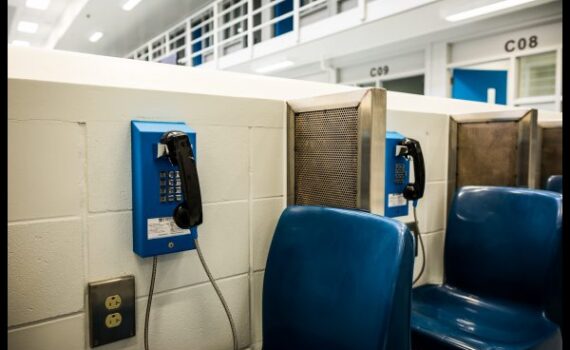
phones-in-prison-cellsHere is an interesting article endorsing the deployment and use of phones in prison cells to increase prisoner family contact and reduce recidivism. The issue of public perception of such a strategy is acknowledged, but enhancing access to telecommunication services will reduce the value of contraband cell phones and improve officer safety in prisons and jails. The strategy can easily be accomplished with no upfront cost through the deployment of the meshDETECT secure prison cell phone solution.

Telephones and not just televisions should be allowed in prisoners’ cells, the chief executive of the Scottish Prison Service has suggested.

Colin McConnell said helping people keep in touch with their families could help prevent reoffending.

He raised the idea with MSPs on Holyrood’s Justice Committee.

“I know that might stick in the craw of certain members of the public and maybe some members sitting round the table here,” Mr McConnell admitted.

“It seems to me you get people to behave normally if you treat them normally; you try and recreate normality.

“One of the things that’s generally accepted helps towards reducing reoffending is relationships and family contact.

Television curfew

“Anything reasonably and safely we can do to help sustain and develop family contact, we should give it a go.”

Mr McConnell admitted, in mentioning phones in cells, he was being “a wee bit reformist”.

The SPS chief executive said he is a “fan of TVs in cells” for prisoners, with “loads of positives that come from that”.

Labour MSP Graeme Pearson, a former director general of the Scottish Crime and Drug Enforcement Agency, asked Mr McConnell if a 01:00 television curfew in operation at Low Moss Prison in Bishopbriggs should be extended to all prisoners.

The SPS chief executive replied that television could be a “window on the world”.

“It’s about keeping informed about what’s going on and actually it’s a displacement activity as well,” he said.

Encouraged to sleep

“If it stops somebody thinking horrible thoughts about themselves or others and encourages discourse about Coronation Street, the news or whatever it might be, I think there’s loads of positives that come from that.

“I know it’s one of those issues that polarises people, but I think there’s a place for it. Whether it should have a curfew, I think there are pros and cons.

“I’d much rather treat people with the respect and decency in the sense of ‘please use it sensibly’ and those that don’t, we might have to curtail it.”

Mr Pearson, the South of Scotland MSP, had suggested that, having visited the Bishopbriggs facility, the curfew appeared to have a “very positive effect on the prison” because it encourages prisoners to go to sleep, “which means, in the morning, they are more engaged and ready to go out and do something”.

Committee convener Christine Grahame said both televisions and phones in cells should come “with the caveat that presumably it’s monitored what they are watching and obviously phone calls, so people don’t think they are in some kind of Marriot Hotel instead of in prison”.

Source


Prison Managed Access System Jammer Deployments

managed-access-jammer-trialsSince the first high profile prison managed access system (MAS) jammer deployment to thwart contraband cell phones at the MDOC facility in Parchman, MS., state departments of correction around the country have been evaluating the technology for potential deployment.

The California Department of Corrections and Rehabilitation (CDCR) announced a statewide deployment of cell phone jammers, despite high profile concerns about their effectiveness. And recently, Texas and Maryland moved to test the technology in their prison facilities.

Given these high profile initiatives and the high cost of the systems, it is not surprising that new MAS providers have moved into the market to challenge the incumbent, Tecore. A review of recent FCC Experimental Licensing System applications show the following firms deploying and testing managed access jamming systems in state prisons around the country:

Update (3/28/13): Screened Images has applied for FCC Experimental Licensing at:

  • Avenal (KINGS), CA (0276-EX-ST-2013)
  • Avenal (KINGS), CA (0178-EX-PL-2013)
  • Leakesville, MS (0220-EX-ST-2013)

Update (2/9/13): Screened Images has applied for FCC Experimental Licensing at:

  • California Corrections Center (0107-EX-ST-2013)
  • High Desert State Prison (0108-EX-ST-2013)
  • Pelican Bay State Prison (0109-EX-ST-2013)
  • California Health Care Facility (0112-EX-ST-2013)

Update (2/4/13): Screened Images has applied for FCC Experimental Licensing at:

  • Sierra Conservation Center (SCC) located at 5100 OByrnes Ferry Rd, Jamestown, CA 95327 (0105-EX-ST-2013)
  • Mule Creek State Prison (MCSP) located at 4001 Highway 104 Ione, CA 95640 (0041-EX-ST-2013)

Company

Location

Application Data

Notes

Screened Images, Inc.

South Mississippi Correctional
Institution –
Leaksville, MS

7/2/12

0539-EX-ST-2012

0901-EX-ST-2012

Owned by Joseph Noonan, founder of Corrections.com & BINJ
Labs

Screened Images, Inc.

Avenal State Prison (ASP)
located at 1 Kings Way
Avenal, CA

11/13/12

0541-EX-ST-2012

0902-EX-ST-2012

Screened Images, Inc.

Ironwood State Prison (ISP) located at 19005 Wileys Well Road Blythe, CA

12/14/12

0980-EX-ST-2012

Screened Images, Inc.

Chuckawalla Valley State
Prison, 19025 Wileys Well Rd. Blythe,
CA

12/14/12

0981-EX-ST-2012

Screened Images, Inc.

Centinela State Prison, 2302
Brown Road Imperial, CA

1/11/13

0983-EX-ST-2012

Screened Images, Inc.

Calipatria State Prison (?)

12/17/12

0987-EX-ST-2012

App has been requested to be made confidential. The
“why STA is necessary” field says that the demonstration is to take
place at Ironwood State Prison

(ISP) located at the Avenal State Prison (ASP) located at 1 Kings WayAvenal,
CA 93204
yet the

transmitter location is for Calipatria, CA

Blind Tiger Communications, Inc.

Phillips State Prison, 2989 West Rock Quarry RdBuford, Georgia

8/18/12

0749-EX-ST-2012

0979-EX-ST-2012

Owned by the founder
of mobile-soap.com

 We contacted an employee of Blind Tiger Communications who shared with us that the system is working as required, is cost effective compared to the competition, and has the State of Georgia (Govenor’s Office) extremely pleased. Efforts to reach Joseph Noonan for comment were unsuccessful.


Contraband Cell Phone Supply & Demand

The American Correction Association has an article on its website summarizing the recent meeting of the newly-formed No Cells in Cells Coalition on Oct. 23, 2012, at the ACA headquarters to discuss the problem of contraband cell phones smuggled into prisons. Attendees included representatives from the Delaware Department of Corrections, the Maryland Department of Public Safety and Correctional Services, the Virginia Department of Corrections, the American Jail Association, the National Organization for Victim Assistance, the National Sheriff’s Association, cell phone companies Sprint and ATT, the Federal Bureau of Prisons and others.

According to the article, the attendees discussed the types of offenders most likely to attempt to smuggle phones. “Members concluded that while phones are more likely to be smuggled by long-term offenders looking to continue their drug or crime operations, witness intimidation within pretrial facilities is common as well. Kristy Dyroff, director of communications for the National Organization for Victim Assistance, commented that witness intimidation through use of cell phones in pretrial facilities is most common in domestic violence cases.

Several methods currently used to combat the issue of contraband cell phones were discussed throughout the meeting, including:

• Dogs trained to sniff out cell phone parts;
• Technologies such as managed access;
• Thorough searches and seizures by correctional staff;
• Metal detectors; and
• Observation and profiling to determine which offenders are most likely to
smuggle phones.

Though each method has its benefits and downsides, according to Judi Garrett, assistant director of the Federal Bureau of Prisons, no single method has been proven significantly more effective than the others.”

We fully support the initiatives recommended by this coalition. Yet what is interesting about this list is that all the measures being contemplated are supply side solutions. There seems to be no thinking on how to address the demand side of this issue however…

Interestingly, another recent blog posting, this one from Marcus Spectrum Solutions, discusses the recent decision by the FCC to take up the Wright Petition on high prison long distance rates and the impact these rates have had on driving the demand for contraband cell phones. The title of the post is “Telecom Policy Lessons from the War on Drugs.”

In the article, the author states, “A key lesson from the War on Drugs is that one must work both the “demand side” and “supply side” of these intractable problems to make progress. Short of having a total police state one just can not eliminate antisocial products that are in high demand.”

Clearly, there is nothing closer to a pure police state than a federal or state correctional facility, yet cell phones remain a significant problem in these facilities. The formation of the No Cells in Cells Coalition is proof of the challenge and size of this issue. And, as the author states, the reduction of the high long distance (interstate) rates common in many states may address some of the demand for contraband cell phones.

We believe however that the problem of demand for smuggled mobile phones in jail goes beyond long-term offenders looking to continue their drug or crime operations, witness intimidation and the avoidance of high LD rates. The demand is also driven by a desire for more communication and more privacy (not secrecy) and as such, any comprehensive solution should address both sides of the equation – supply and demand.


Telephones Installed Inside Prison Cells

In May of 2011 we wrote about a British prison that solved the problem of contraband cell phones by installing landline telephones in each of the cells of a jail. The results were fewer smuggled phones, less violence, and even fewer failed drug tests! Now another prison in the U.K is taking the same approach.

As the authorities responsible for the prison state, the installation of a phone in each prison cell “may reduce the number of mobile phones being smuggled into prisons.” Additionally, the greater use of IT could transform prison education, resettlement and family contact.

For existing jails and prisons where the installation of a hard wired wall phone is impractical due to cost and infrastructure limitations, a secure prison cell phone solution such as meshDETECT will achieve the same results with no capital outlays.

Prisoners have been given telephones inside their cells despite ministers promising to crack down on perks behind bars.

Convicts at a young offender institution in Kent in the United Kingdom have become the first in state-run jails to be given personal landlines that they buy credit to use at any time of day or night.

They can only ring numbers approved by the authorities and cannot receive calls on the handsets, while the cost of installing them is being covered by BT.

If the pilot scheme is deemed a success it could be copied in public sector prisons across England and Wales, having been used for several years in privately run institutions.

But it is taking place at the same time as the new Justice Secretary, Chris Grayling, has vowed to stop prisoners spending all day in their cells watching television or playing video games.

Unions also fear that governors are putting phones in cells in order to reduce the amount of time that criminals spend on landings or communal areas, allowing them to reduce the number of guards required.

Juliet Lyon, director of the Prison Reform Trust, said: “Greater use of IT could transform prison education, resettlement and family contact but as a complement to, not a substitute for, good professional staffing.

“No one wants Big Brother hi-tech prisons with everyone held behind their doors and no human interaction.”

The deputy general secretary of the National Association of Probation Officers, Harry Fletcher, said: “There must be safeguards that these phones are not used to contact, harass or intimidate victims. The same goes for drug dealing and organised crime.”

However he added that the move may reduce the number of mobile phones being smuggled into prisons.

Until recently inmates had to queue up to use phones on prison landings if they wanted to speak to friends or family, prompting a black market in mobiles brought in by visitors. Many jails now allocate time slots for individual prisoners, who must give details of who they want to call, to use the public handsets.

But some newly built jails run by private firms have started to feature phones inside cells, and now HMYOI Rochester has become the first state-run prison to install them.

In the pilot scheme, selected cells on two wings have been fitted with telephones at the Victorian institution, which is currently home to about 600 men aged between 18 and 21 who have been sentenced to up to four years behind bars.

Under the BT system, they must set up a personal account that is accessed by a PIN and give the authorities the names, addresses and phone numbers of the people they wish to call so a list can be approved. The calls are monitored and recorded by the authorities, and inmates are warned against saying anything linked to crime, escape plans, threats or coded messages.

Prisoners must buy credit to use the BT Pinphones and calls to landlines cost 9p a minute but ringing a mobile costs 20p a minute. There is no limit to how many calls they can make.

Inmates can also have televisions in their cells for £1 a week while those given “enhanced” status for good behaviour are allowed PlayStation consoles from home and can sleep on their own bedding.

Last month the prisons watchdog, Nick Hardwick, said too many prisoners were “lying on their backs in their cells watching daytime telly” because of a lack of money and staff to give them useful activities.

But some of the in-cell perks could be scrapped as ministers try to stop prisons being seen as “holiday camps”.

A law is being passed that will allow jamming devices to block mobile phone signals in jails, while access to satellite TV channels could be removed.

A spokesman for the Ministry of Justice said: “Ministers are reviewing the policy around the incentives scheme for prisoners. It is crucial that these incentives are appropriately earned and that they have credibility with the public.

“A pilot scheme has been running at HMYOI Rochester which gives prisoners limited access to phones in their cells. In cell phones are subject to the same security controls that apply to phones on the communal landings, no prisoner can receive calls on this system.

“This pilot will be evaluated and the results considered along with the other benefits associated with the incentives scheme.”

Source


Wireless Prison Payphone™ Briefs

Here is a summary of recent news articles regarding contraband cell phones in prisons around the world. I am calling this round up of articles, “Wireless Prison Payphone™ Briefs” because this is essentially what smuggled mobile phones in jails have become – a substitute for the current wall mounted prison payphones.

Mobile phone jamming technology set for Scotland’s prisons:
Mobile phone blockers, costing up to £1 million per prison, are being planned to stop inmates continuing to run criminal operations from behind bars.

Detective Chief Superintendent Stephen Whitelock, head of intelligence group at Scottish Crime and Drugs Enforcement, said: “We have established a national prison intelligence unit which involves close collaboration with the SPS and the eight police forces, and one of the key strands of work is to tackle the use of mobile phones in prison.”

However, the Mobile Broadband Group, which represents providers, has raised concerns. “The interference equipment that will be allowed within prisons as a result of this legislation has the potential to cause harmful interference to the customers of the mobile operators legitimately using their mobile devices in the vicinity,” it said.

Scottish Conservative chief whip John Lamont added: “Everyone agrees that prisoners should not be able to access mobile phones or the internet outwith times monitored and agreed by the Scottish Prison Service. But the way to do this is to clamp down on smuggling. (Source)

Low-tech vs. high tech to stop cell phones in prison: California prison officials are trying a new tack to stop cell phone use by inmates. They are trying to block cell phone signals, but the technology has failed when used in other states. Every year, thousands of cell phones are confiscated in California prisons.

Inmates use them for various and nefarious reasons – ordering hits and managing gang activity from the inside out. How the phones get in is just as varied and shadowy. Evidence and testimony from officials with the California Department of Corrections and Rehabilitation (CDCR) show that staff members smuggle in phones for a lucrative profit.

Yet, corrections officers are not searched when they show up for work. Some reports say it would violate their contract, others say the state doesn’t want to pay for the shift time resulting from searches. What is the best way to stop cell phones in prisons? Why aren’t corrections officers searched? (Source)

Welcome to Costa del Jail! Facebook boasts of thugs and burglars serving time: Stripped to the waist and grinning from ear to ear, they look like a group of young friends posing for a holiday snap.

Actually these eight men are prison inmates parading for the camera – and they flouted a ban on mobile phones to upload the results to Facebook.

As well as dressing in their shorts, they poured scorn on the justice system by likening their prison sentences to a holiday in Spain. (Source)

Prison video visits threaten to put profit before public safety: Virtual visiting has become the latest craze in prisons, with at least 20 states now having some kind of video conferencing system in place. As most prisoners tend to get housed in facilities at least 100 – and often up to 500 – miles from home, frequent visits are impossible for families; so video calls at least offer the opportunity for some virtual face time.

Unfortunately, however, what could be a positive additional means for prisoners and their families to stay in touch is in danger of becoming any thing but a blessing. Some jurisdictions have already begun to eliminate contact visits entirely in favor of their virtual counterpart – and private corporations are already lining up to exploit this latest opportunity to fleece prisoners’ families. (Source)

Prisoner’s Facebook page ‘mocks jail system,’ union head says: A Facebook profile of a jailed, notorious street gang member highlights the smuggling problem in Quebec’s detention centres, according to the president of the province’s union of correctional officers.

Jonathan Jano Klor, sentenced to 14 years in prison in September for attempted murder, is listed on a public Facebook profile as a “young entrepreneur.”

The profile was created in July while Klor was in Montreal’s Riviere-des-Prairies Detention Centre awaiting sentencing. (Source)


Contraband Prison Cell Phones Using Encrypted VoIP

An imprisoned terrorist in India is using a contraband cell phone and a custom built encrypted VoIP network to secure his communications with his organization. The VoIP network runs on GPRS (mobile data service on 2G or 3G cellular communication system), and was created by the terrorist’s own tech team. The technical significance of this approach is the use of the data transmission capabilities of the cell phone to transmit encrypted voice conversations that cannot be monitored.

The increasing use by terror group Lashkar-e-Taiba of Voice over Internet Protocol (VoIP) for communication, and its impenetrability, is proving frustrating for Indian intelligence. In fact, Lashkar supreme commander of operations, Zaki-ur Rehman Lakhvi, who is in a Rawalpindi jail, has been networking using a private VoIP on his smart phone with Lashkar cadres.

“Lakhvi’s compound serves as Lashkar’s alternative headquarters,” a top intelligence source told TOI. It was his imprisonment, sources said, that stopped Lashkar cadres from using emails and phones and restrict communication to VoIP.

VoIP is a technology that delivers audio and video messages over the internet. It’s distinct from phone as it converts audio signals into binary data. VoIP also allows encryption of data, which makes it difficult to decode messages.

Senior intelligence sources in Kashmir told TOI that Muridke (Lahore) based Lashkar known for using technology more than any other terror group in Kashmir, has its own private VoIP, Ibotel, to communicate with its cadres in Pakistan and Kashmir.

Ibotel, Lashkar’s exclusive VoIP that runs on GPRS (mobile data service on 2G or 3G cellular communication system), was created by Lashkar’s own tech team. The group began recruiting technicians, engineers and information technology executives almost a decade ago to intensify its operations across India.

Lashkar, which is headed by Hafiz Saeed against whom the US recently announced a $10 million bounty for his alleged role in the November 2008 Mumbai attacks, started using VoIP as soon as the technology became common in early 2000s. Lashkar’s handlers used VoIP during the Mumbai attacks, intelligence sources said.

“Earlier, we could intercept conversations on phone or locate Lashkar cadres based on their IP addresses through their emails. But now we’re finding it tough to gather intelligence because Lashkar men hold audio or video conferences using private VoIP,” said intelligence sources.

“It’s difficult to track their locations. And even if we know their IP addresses and the time and date of their audio or video calls, we remain technologically handicapped because we can’t intercept what transpired between them,” said a senior government official.

“There may not be more than 50-odd Lashkar men. Yet, they are a threat because they have the ability to strike in the Valley or other parts of the country. We need to catch up with the technology to hunt them down,” said a senior J&K police officer.

An intelligence officer in New Delhi said the problem was not India specific. “Other countries are also unable to intercept the contents of VoIP messages. The only way to do it is to gather basic intelligence, zero-in on suspected email addresses used for VoIP conversations, and get to the mother servers for a search under Mutual Legal Assistant Treaty (MLAT),” he said.

Source


Officers Smuggling Mobile Phones Into Prisons

This news report discusses the problem of contraband cell phones smuggled into a Ghana prison. According to the article, “the most precious commodity inside the Nsawam prison today is the mobile phone.” It also states, “The use of mobile phones in our facilities has become a serious business raking in money for both inmates and prison officers.” As discussed in an earlier blog post, contraband cell phones are now seen to be the prison system’s greatest threat here in the United States as well. Any solution to this problem, whether here or abroad, should include a strategy to address the demand for as well as the supply of contraband cell phones.

Hardened criminals in Ghanaian jail houses may be coordinating armed robbery attacks and running narcotic drug businesses from behind bars, investigations by The Globe newspaper have revealed.

The Globe has established growing use of illegal cellular phones in Ghana’s jail houses, especially at the Nsawam Medium Security Prison. There is a long lasting ban on the use of mobile phones behind bars. Our investigations established that ever smaller handsets allow phones to be smuggled in by prisoners, visitors or corrupt staff.

On January 9, 2012, the total number of inmates in the nation’s jail houses stood at 13,588. At the Nsawam Prison, official figures put the population of inmates at 3,512. But, it is unknown the unknown the number of inmates at Nsawam who have access to the smuggled mobile phones. “Indeed, the most precious commodity inside the Nsawam prison today is the mobile phone”, said a worried junior officer with the Ghana Prisons Service, who wished not to be named. There are fears illegal phones could fuel prison drug trading, bullying and gang problems.

Behind bars, phones can cost 300 Ghana cedis (~$174 US), the phones are usually paid for by relations and friends of phone-seeking inmates. Smuggled into the prisons by relations of inmates and in many cases prison officers, the phones are used to organise narcotic drug deals, intimidate victims, and plan armed robbery attacks from prison with criminal gangs outside the prison walls. “The use of mobile phones in our facilities has become a serious business raking in money for both inmates and prison officers,” the officer said.

“It is an issue that has been with us for some time now,” the young Prison Officer told the Globe newspaper, adding: “Top management of the Prison Service is aware, but has virtually refused to deal with the problem.” “Visitors to the facilities and some corrupt senior officers are the ones fueling the illegal practice,” said the officer.

The revelations come at the time some European countries and some states in the United States have stepped up crack-down on illegal mobile phone use in their jail houses, after a series of bloody prison violence blamed on phones smuggled into prison cells.

Source


State-wide Network Smuggles Prison Cell Phones

A state-wide network of Georgia ex-cons smuggled contraband cell phones into prisons on demand and at $300 per cell phone. Drugs were also smuggled into the Georgia DOC facilities.

State, area and local investigators have uncovered a trail of cell phones, marijuana and tobacco that led straight to state prisons.

Several people were arrested here and in Colquitt County in connection with the operation. At least one other arrest is expected in Thomas County.

The statewide investigation showed a prisoner would request the contraband and tell the suspects where to leave the items.

The activity involved a vast network of co-conspirators outside the prisons.

The contraband would be left away from the prisons, said Kevin Lee, commander of the Thomas County/Thomasville Narcotics/Vice Division.

“The location could be on a work detail,” Lee explained. “It could be anywhere.”

The Georgia Department of Corrections Investigation Unit participated in the probe. The state agency did not respond Thursday to a request for information.

In Thomas County, Henry Curtis Ansley III, also known as Bubba, 38, 708 Hunters Chase, is charged with criminal conspiracy and unlawful possession of Hydrocodone.

Ansley is a former state prison inmate, who served time with another person charged in the investigation.

Lee said investigators found various addresses in Ansley’s text messages that told where he was to leave prison contraband.

“An ounce of marijuana will go for $400 to $500 in prison,” the commander said. A cell phone costs an inmate about $300.

When he was arrested, Ansley had hydrocodone pills in a pocket, and officers found more of the narcotic pain killer at his residence.

A corrections officer at Colquitt County Correctional Institute is charged in the case.

Richard Dale Roberts, 43, 10 Wiregrass Circle, Moultrie, is charged with violation of oath of office, felony possession of marijuana, illegal use of a communications device and conspiracy to commit a crime.

Steve Exum, commander of the Colquitt County Drug Enforcement Team, said charges on Roberts stemmed from information received from the correctional institute warden about contraband being brought into the facility.

Exum said Roberts was attempting to deliver marijuana to the correctional institute.

“It was marijuana he has just purchased from an FBI task force officer,” Exum explained.

Also charged in the case are Billy Joe Bowling, 35, 161 Dogwood Lane, Thomasville; Marcos Lewis Brewer, 22, 775 Flintside Drive, Cobb; and Jason Curry Icard, 39, 310 Highway 240 South, Buena Vista.

Bowling and Brewer are on parole, said Cpl. Kim Young of the Colquitt County drug agency.

Ansley and Brewer were in the same prison at the same time, Young explained.

Bowling, Brewer and Icard, who are charged with felony marijuana possession, were traveling in a red Honda Civic that did not stop at a stop sign in Colquitt County. A deputy made a traffic stop.

The marijuana was thrown from the car’s sunroof, Young said, adding that the contraband being tossed from the vehicle was recorded on video by a camera in the deputy’s car.

Seized in the Colquitt County arrests were a large quantity of cell phones and chargers and 90 bags of loose-leaf tobacco.

“They admitted to the intent of dropping the contraband at several state prisons, and they had several times prior,” Young said.

Source


Facebook Profile For Prisoner Under Investigation

Yet another instance of a prisoner using a contraband cell phone with internet access to post on Facebook. The meshDETECT secure prison cell phones do not allow internet access.

The sister of a murder victim is calling for Indiana prison officials to remove a Facebook profile for an inmate at the Wabash Valley Correctional Facility in Carlisle.

Quintez Deloney, 20, of New Albany, is serving a 38-year sentence for a burglary that led to the death of 26-year-old Lewis James of Charlestown. James’ sister, Lisa Cunningham, said she learned Saturday that Deloney has a Facebook page on which he appears to be posting from prison.

“It feels like five years ago all over again. It’s like everything just happened again,” Cunningham said. “[Deloney] shouldn’t have any freedom. Once you’re in prison, you lose all your rights.”

In January 2007, James was shot seven times — four times in the back — at an apartment on William O. Vance Court in New Albany where he went to buy drugs. Floyd County prosecutors alleged Deloney and Lance Douglas, 24, kicked down the door to the apartment and attempted to rob James. When James resisted, he was shot.

Although prosecutors argued Deloney was the shooter, the jury convicted Douglas of murder but found Deloney guilty of only robbery and burglary. Deloney was sentenced in May 2009 to 80 years in prison, but that was reduced after the Indiana Court of Appeals found he should not have been sentenced for both the robbery and burglary charges because of the double jeopardy provision.

Deloney, through his attorney Bruce Brightwell, has filed a motion to correct error with the court seeking to have his conviction overturned or sentence reduced. That matter is set for hearing March 9.

Deloney has been serving his time at the Wabash Valley Correctional Facility since he was sentenced. A Facebook profile for “Quintez Q-Ball Deloney” has 184 friends. The first update on the page was July 17, 2011.

A post on the page includes Deloney’s prison mailing address. There are several posts about the case. On Oct. 11, he wrote that he was starting another appeal. On Oct. 15, he wrote, “beat anther case i feel like gotti did … BRR!”

In another message, he indicated he would be released in 2014 even though the Indiana Department of Correction lists his earliest possible release date as 2026. Most of the posts contain profanity and are not fit for publication in the News and Tribune.

At one point, someone asked how he had Facebook access in prison. He responded, “thats somethang thats kept secret!”

Susan Harrington, spokeswoman for Wabash Valley, said Cunningham’s complaint has been filed with internal affairs investigators. Harrington said Deloney will be disciplined if it is true that he has somehow been posting messages from prison.

Wabash Valley does not allow inmates to have cell phones, and Harrington said they have no Internet access through legal means inside the prison. Most of Deloney’s posts indicate they were made using a mobile device.

“Usually, if we find them with any kind of cell phone or communication device, it’s confiscated and we go through disciplinary procedures,” Harrington said.

Cunningham said she contacted Wabash Valley and Congressman Todd Young, R-Ind., asking for help to remove Deloney’s Facebook profile. Cunningham said she is speaking out because she does not want family members of other murder victims to have to see pictures of their loved ones’ killers or accomplices on Facebook.

Other states have also had to deal with inmates using Facebook. The California Department of Corrections announced in August that it had started reporting inmate pages to Facebook and that the company had agreed to delete pages that had been updated since the inmate was incarcerated. Facebook has a policy against anyone using a fake name or updating a profile for another person.

That move came after a convicted child molester accessed Facebook photos of his victim and sent current drawings of her to her home even though he had not seen her in seven years.

More than 1,760 contraband cell phones were confiscated from Indiana state prisons in 2010, according to Department of Correction records.


Source